

Private. Secure. Compliant.
GPU compute.
Private GPU infrastructure for AI teams running model training, fine-tuning, and inference. Single-tenant or multi-tenant. Bare-metal performance on current enterprise GPUs. Data residency in the United States and Europe.
- PrivateInfrastructure
- Multi or singleTenant options
- Bare-metal performanceOn latest GPUs
- US & EuropeData residency
Private GPU compute for training, fine-tuning and inference
Five ways to run GPU workloads on private infrastructure. Each one has a page of its own with the configuration, the trade-offs and the questions teams ask before they commit.



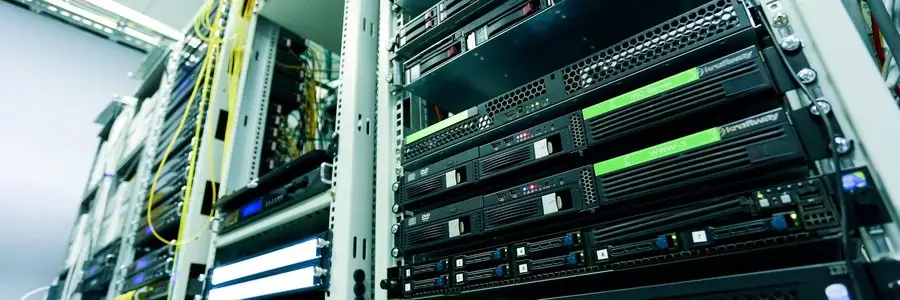

Why teams choose dedicated GPU infrastructure
Isolation you can specify
Public cloud GPU is multi-tenant by design. Weights, datasets, and fine-tuning runs co-reside with other tenants. Deep Leaf offers single-tenant isolation when policy requires it, and multi-tenant capacity when it does not.
US and Europe data residency
Offshore capacity crosses borders many policies do not allow. Facilities are in the United States and Europe, with no cross-border transfer outside those regions, and with export-control compliance.
Enterprise hardware, available now
Consumer cards have no ECC memory, no warranty, and no tolerance for sustained load. Reserved public-cloud queues are often three to six months. Deep Leaf runs enterprise GPUs with ECC memory and a full warranty, on capacity available now.
Operations before a run fails
Continuous DCGM telemetry watches every GPU, power supply, and thermal envelope. On-site staff are in every facility. Remote hands are available at any hour, so a degrading part is replaced in a maintenance window rather than found when a run dies at hour forty.

Who runs on private GPU clusters
- Enterprise AI teams whose training data is sensitive or proprietary, including healthcare, financial services, and government-adjacent workloads
- Teams whose data policy rules out multi-tenant public cloud
- Model-training groups that need reserved multi-node capacity under a fixed configuration
- Teams moving inference off shared GPU endpoints onto a private network
- Organisations with United States or European data-residency requirements

Where dedicated GPU compute differs from public cloud
| Deep Leaf, single-tenant | Deep Leaf, multi-tenant | Public cloud | Overseas | Consumer GPU | |
|---|---|---|---|---|---|
| Data stays isolated | Yes | Boundaries only | No | Partial | No |
| US & Europe data residency | Yes | Yes | Depends | No | Depends |
| No shared infrastructure | Yes | No | No | No | No |
| ECC memory + full warranty | Yes | Yes | Yes | Varies | No |
| Available now | Yes | Yes | 3–6 mo | Varies | Yes |
| RTX PRO 6000 available now | Yes, from inventory | Yes, from inventory | Limited regions, queued | Varies | No |
Full comparison: private GPU vs public cloud → Security and data boundaries → Request a configuration →
Tell us the shape of the workload.
GPU count, run duration, and data-handling requirements. We reply within one business day with a configuration, compliance documentation, and availability. An NDA is available before any technical discussion. Enquiry details are not shared with third parties.
GPU compute questions
Who is Deep Leaf Infra for?
Enterprise AI teams whose training data is sensitive or proprietary, particularly healthcare, financial services, and government-adjacent workloads, plus any team whose data policy rules out multi-tenant cloud.
What makes the compute private?
Single-tenant capacity is reserved for your workloads alone. Multi-tenant capacity is a partition of a shared fabric, with clear data boundaries, for teams that do not need a full cluster.
Where is the infrastructure located?
In US and Europe-based data centres, with residency in those regions and no cross-border transfer outside them.
What hardware runs the workloads?
The GPU the workload needs, NVIDIA or AMD, sized for compute, memory bandwidth, and interconnect. Training clusters include ECC memory and networked storage.